Impact
- UX proved most effective when it bridged business goals and technical realities. Shared artefacts and a clear system narrative helped teams align faster and execute with confidence.
- The impact extended beyond visual improvements. The demo landing page remained live and in active use through 2023, reflecting the durability and long-term value of the system.
NEXT WORK → Nova App
ROLE
UI/UX Design & Front-End Development
Overview
This project focused on transforming Phillip Nova’s campaign landing pages into a scalable lead-generation system. Beyond visual design, the work addressed how marketing campaigns captured, validated, and routed leads within a regulated financial services environment—balancing conversion, compliance, and usability.
Rather than treating landing pages as isolated deliverables, the effort reframed the sign-up experience as part of a repeatable acquisition framework, improving user experience while enabling consistent measurement and optimization at scale.
Due to NDA and privacy constraints, detailed insights into internal data, problem discovery, and implementation specifics are not included.
Nova - Landing Page
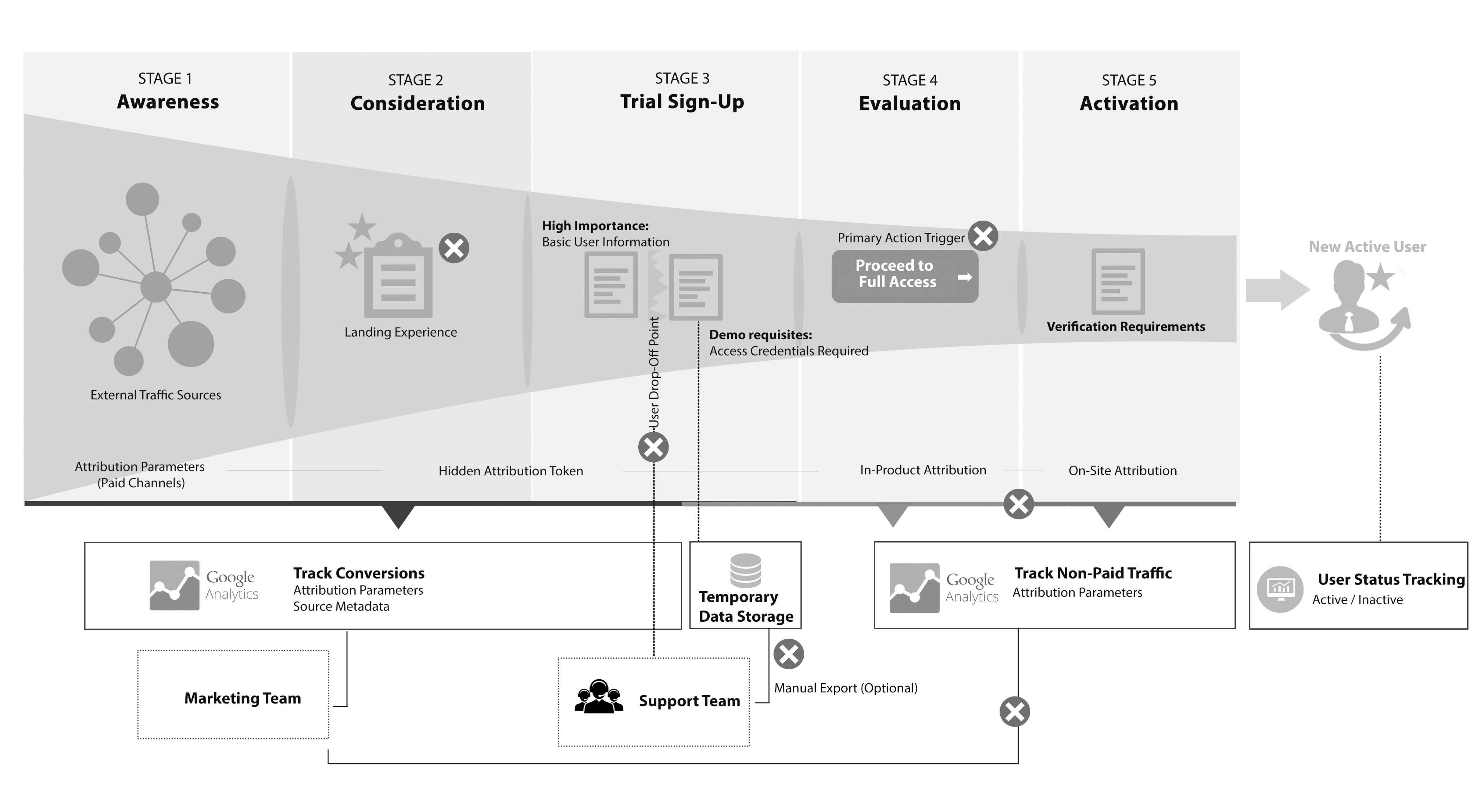
Diagram is a generalized representation. Labels and flows have been anonymized for confidentiality.
View Live
This project was completed during my time with the organization. The live website is shared for reference only; content and implementation may have changed since my involvement.
The Approach
- I approached the work as a system and product problem, not a visual refresh.
- I began by auditing existing landing pages, forms, and data flows across campaigns. This surfaced clear inconsistencies in UX patterns, messaging, and how leads were captured, validated, and tracked.
- To understand the real points of friction, I mapped the end-to-end journey—from campaign entry points through form submission and downstream data handling. This made drop-offs, attribution gaps, and manual handoffs visible, helping align stakeholders on where the experience was breaking down.
- I then reframed stakeholder discussions from “designing better landing pages” to “designing a scalable acquisition funnel.” Multiple solution paths were presented, with trade-offs evaluated across effort, complexity, and long-term value to support informed decision-making.
The Outcome
- A unified landing page structure
- A centralized lead capture process
- Modular, reusable components that could be adapted across campaigns without rebuilding from scratch
the implementation
(dual role: UX + frontend)
I implemented the demo pages within the corporate website CMS—configuring, building, and deploying them to ensure design intent translated cleanly into production and supported reuse across campaigns.
Ron Hupa
Designed and built by me, imperfections included.
® 2025

Impact
- UX proved most effective when it bridged business goals and technical realities. Shared artefacts and a clear system narrative helped teams align faster and execute with confidence.
- The impact extended beyond visual improvements. The demo landing page remained live and in active use through 2023, reflecting the durability and long-term value of the system.
NEXT WORK → Nova App
ROLE
UI/UX Design & Front-End Development
Overview
This project focused on transforming Phillip Nova’s campaign landing pages into a scalable lead-generation system. Beyond visual design, the work addressed how marketing campaigns captured, validated, and routed leads within a regulated financial services environment—balancing conversion, compliance, and usability.
Rather than treating landing pages as isolated deliverables, the effort reframed the sign-up experience as part of a repeatable acquisition framework, improving user experience while enabling consistent measurement and optimization at scale.
Due to NDA and privacy constraints, detailed insights into internal data, problem discovery, and implementation specifics are not included.
Nova - Landing Page
Diagram is a generalized representation. Labels and flows have been anonymized for confidentiality.
View Live
This project was completed during my time with the organization. The live website is shared for reference only; content and implementation may have changed since my involvement.
The Approach
- I approached the work as a system and product problem, not a visual refresh.
- I began by auditing existing landing pages, forms, and data flows across campaigns. This surfaced clear inconsistencies in UX patterns, messaging, and how leads were captured, validated, and tracked.
- To understand the real points of friction, I mapped the end-to-end journey—from campaign entry points through form submission and downstream data handling. This made drop-offs, attribution gaps, and manual handoffs visible, helping align stakeholders on where the experience was breaking down.
- I then reframed stakeholder discussions from “designing better landing pages” to “designing a scalable acquisition funnel.” Multiple solution paths were presented, with trade-offs evaluated across effort, complexity, and long-term value to support informed decision-making.
The Outcome
- A unified landing page structure
- A centralized lead capture process
- Modular, reusable components that could be adapted across campaigns without rebuilding from scratch
the implementation (dual role: UX + frontend)
I implemented the demo pages within the corporate website CMS—configuring, building, and deploying them to ensure design intent translated cleanly into production and supported reuse across campaigns.
Ron Hupa
Designed and built by me, imperfections included.
® 2025

Impact
- UX proved most effective when it bridged business goals and technical realities. Shared artefacts and a clear system narrative helped teams align faster and execute with confidence.
- The impact extended beyond visual improvements. The demo landing page remained live and in active use through 2023, reflecting the durability and long-term value of the system.
NEXT WORK → Nova App
ROLE
UI/UX Design & Front-End Development
Overview
This project focused on transforming Phillip Nova’s campaign landing pages into a scalable lead-generation system. Beyond visual design, the work addressed how marketing campaigns captured, validated, and routed leads within a regulated financial services environment—balancing conversion, compliance, and usability.
Rather than treating landing pages as isolated deliverables, the effort reframed the sign-up experience as part of a repeatable acquisition framework, improving user experience while enabling consistent measurement and optimization at scale.
Due to NDA and privacy constraints, detailed insights into internal data, problem discovery, and implementation specifics are not included.
Nova - Landing Page
Diagram is a generalized representation. Labels and flows have been anonymized for confidentiality.
View Live
This project was completed during my time with the organization. The live website is shared for reference only; content and implementation may have changed since my involvement.
The Approach
- I approached the work as a system and product problem, not a visual refresh.
- I began by auditing existing landing pages, forms, and data flows across campaigns. This surfaced clear inconsistencies in UX patterns, messaging, and how leads were captured, validated, and tracked.
- To understand the real points of friction, I mapped the end-to-end journey—from campaign entry points through form submission and downstream data handling. This made drop-offs, attribution gaps, and manual handoffs visible, helping align stakeholders on where the experience was breaking down.
- I then reframed stakeholder discussions from “designing better landing pages” to “designing a scalable acquisition funnel.” Multiple solution paths were presented, with trade-offs evaluated across effort, complexity, and long-term value to support informed decision-making.
The Outcome
- A unified landing page structure
- A centralized lead capture process
- Modular, reusable components that could be adapted across campaigns without rebuilding from scratch
the implementation (dual role: UX + frontend)
I implemented the demo pages within the corporate website CMS—configuring, building, and deploying them to ensure design intent translated cleanly into production and supported reuse across campaigns.
Ron Hupa
Designed and built by me, imperfections included.
® 2025